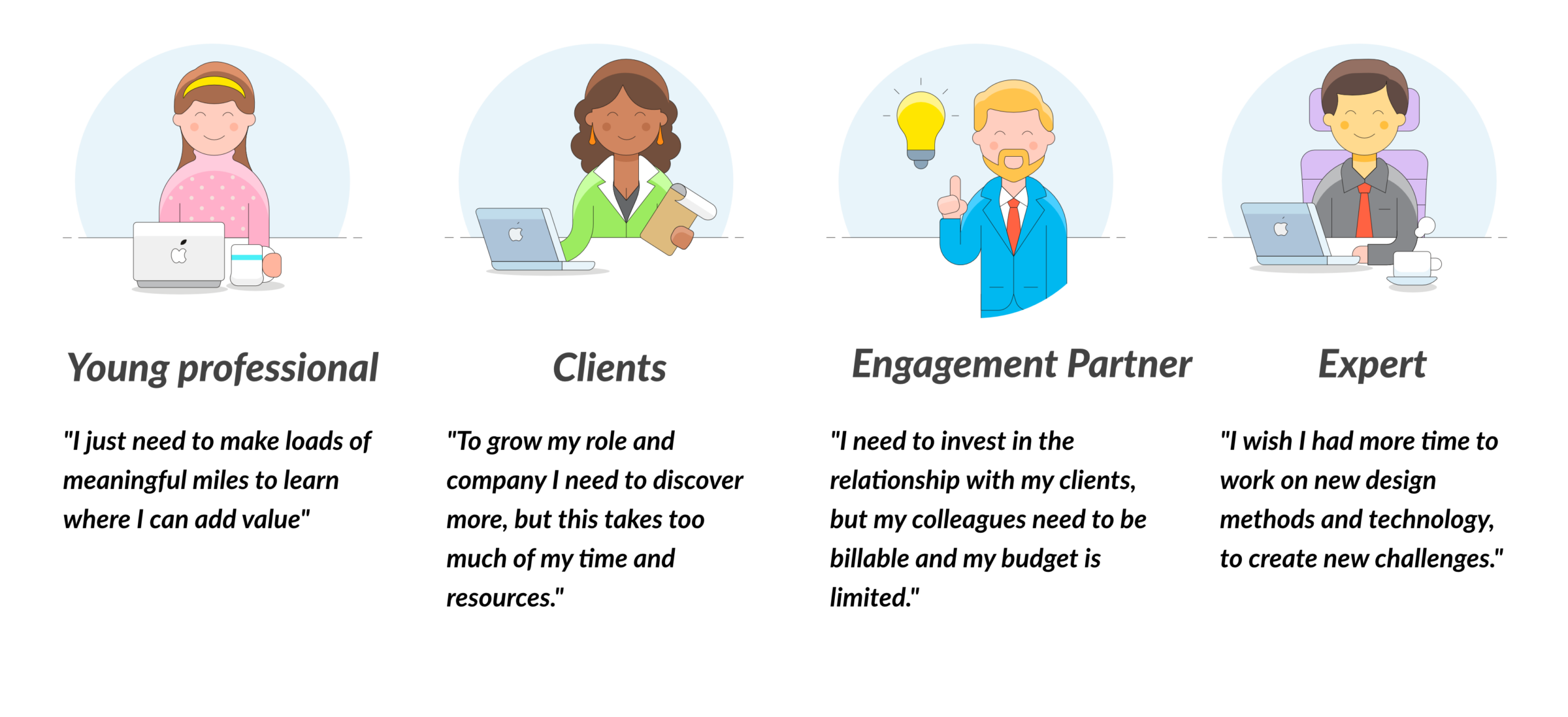
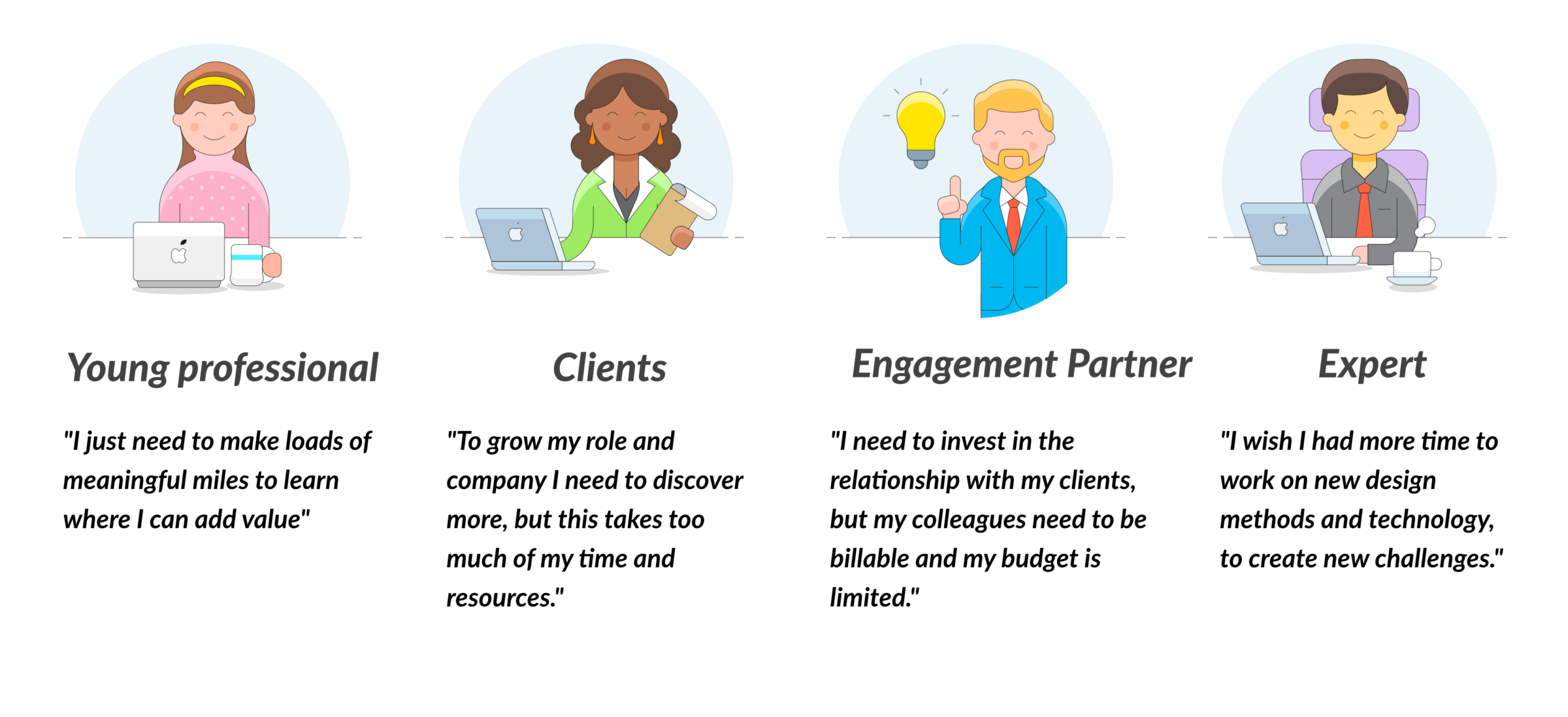
Digital Maker was developed as a collaborative innovation framework to help organizations explore new business opportunities without committing to large, slow, and expensive transformation programs. We saw a recurring challenge: clients wanted to innovate, but often lacked the time, capacity, or internal momentum to do so. At the same time, senior experts were looking for opportunities to experiment with new methods and technologies, while young professionals needed meaningful, real-world experience to accelerate their growth.
The initiative brought those three needs together in one model. Clients contributed a real business challenge, strategic context, and budget. Our experts provided coaching, technical direction, and a roadmap for exploration. Young professionals added time, energy, curiosity, and execution power. The result was a framework designed not just to deliver outputs, but to create a productive exchange in which every participant gained something of value.
My contribution was in shaping this into a clear and compelling proposition: a format that made innovation feel practical, approachable, and worth investing in. A big part of that was translating an abstract ambition into a concrete offer. We needed to show how the framework worked, what clients could expect, how much effort it would require from them, and what types of outcomes it could realistically produce within a short timeframe.
Structure of our framework
To make the proposition easier to understand and adopt, we structured it into three engagement levels: First Steps, Walk, and Run. Each format defined the duration, team composition, level of expert involvement, required client commitment, and budget. This gave clients a simple way to choose a pace that matched their ambition and capacity, while giving our teams enough structure to move quickly and stay focused.
The process itself was intentionally lightweight and iterative. A trajectory could begin within a week, starting with a topic discovery workshop and an innovation roadmap, followed by a first sprint with a handpicked team. From there, the work was optimized in short cycles based on findings, energy, and opportunity. This rhythm helped keep momentum high and made the framework well suited to early-stage exploration, prototyping, and business discovery.
The kinds of opportunities Digital Maker addressed sat at the intersection of business, design, and technology. Focus areas included AI-driven pattern recognition, loyalty automation, anonymized sensorial insights, connected products, and behavioral economics design. Rather than pursuing innovation as a theoretical exercise, the framework aimed to produce visible and testable results: prototypes, proofs of concept, proofs of technology, research outputs, and new business propositions that clients could build on.
Based on Real world proven cases
Its credibility was strengthened by concrete case examples. For Rabobank, the approach resulted in a voice-enabled survey experience that helped capture employee perspectives on innovation during a live event. For Jacobs Douwe Egberts, the team developed a prototype that connected face recognition technology to a coffee machine, creating a playful and memorable interaction around coffee consumption. These cases demonstrated that even in a short timeframe, focused teams could produce work that was both experimental and highly tangible.
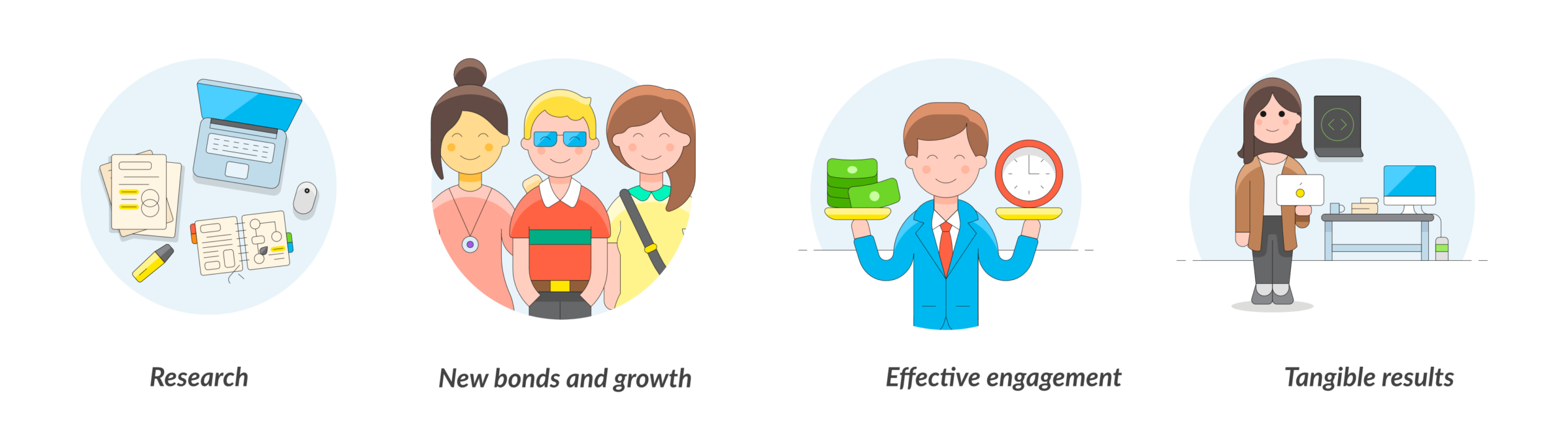
What made Digital Maker distinctive was the way it combined learning, delivery, and relationship-building into a single framework. It generated visible outcomes for clients, hands-on growth for young professionals, and fresh technology exploration for experts. More than a service model, it became a way to make innovation collaborative, efficient, and human — proving that meaningful discovery does not always require heavy investment, but it does require the right structure, people, and shared ambition.